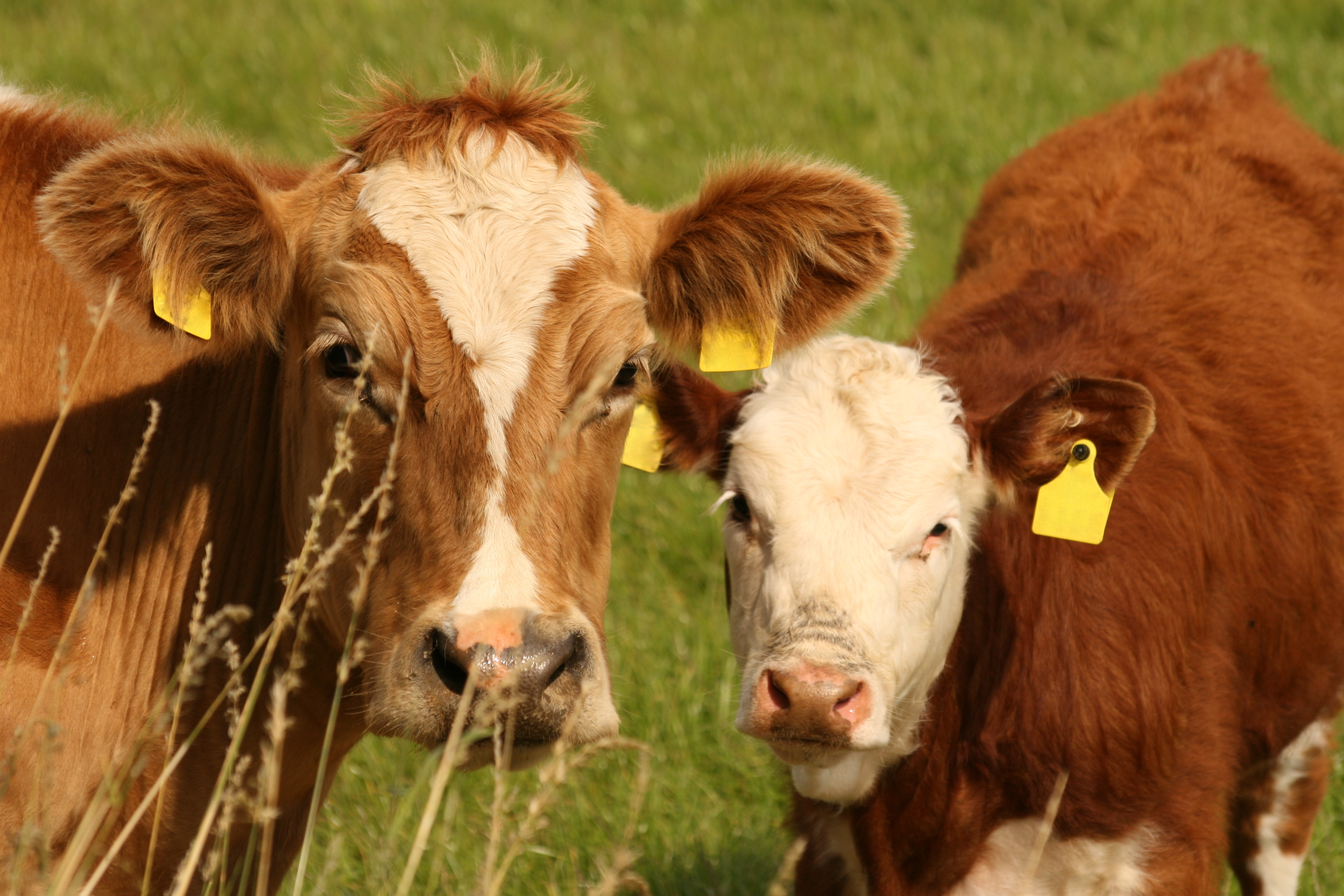
Eating Beef for your health and the Planet Part 2 of 2
Last week’s post addressed how 100% grass-fed meat is better for our health. This week, I’ll review how it’s also better for our planet.
The What
Vegetarians and Environmentalists have been up in arms for years since it was revealed that beef production – the raising and feeding of cows – is responsible for about 20% of global greenhouse gas emissions each year. However, to no surprise, it’s not so black and white. So today, I’ll cover some gray areas in that argument.
The Why
Before you feel terribly guilty for enjoying your hamburger or filet mignon, I want us to know what our choice to eat beef is really responsible for.
Just the Facts Ma’am
During a cow’s lifetime, if grass-fed versus grain-fed, it will produce from its nether regions 20% more methane than its counterpart that eats corn or soy.
However, if you take into consideration that
The grain-fed cow:
- Eats annual grain that must be re-planted each year, fertilized, sprayed with pesticides, and transported, using fossil fuels, AND
- Whose poop and pee are collected into a lagoon or left on bare, muddy, compacted earth where the waste does not get digested and sequestered by soil life,
then a conventionally raised, grain-fed feedlot cow produces more greenhouse gases than the grass-fed cow.
The grass-fed cow
- Eats perennial grasses that are often not fertilized and are eaten where they are grown (so far, far fewer fossil fuels utilized) AND
- Poops and pees into the grass-covered earth, where it is stomped and ground into the soil, where its contents, including carbon, are sequestered and recycled back into the system. The soil on land carefully visited by animals builds and maintains a healthy soil microbiome, which draws down carbon from the atmosphere and makes our food (beef included) more nutrient-rich and heart-healthy.

The other bonus is that a lot of grasslands, where cattle can graze, because of its topography, is not suitable as cropland. Therefore, to feed the world, making more land usable for food production, without having to cut down forests, is a plus.
The bad news in all of this is that there is currently 1 cow for every 5 people on Earth. That’s 1.5 billion cows roaming the planet. Americans eat about 57 lbs of beef per person each year. So maybe we cut our beef intake by half. How we raise cattle can have a huge impact on climate change. But how much beef we demand could also help – no?
If you’ve read enough, skip down to What You Can Do.
Let’s Go Down the Rabbit Hole, Shall We?
When it’s done well for the planet
Cows are raised on carefully managed grassland. They will pass over the same land a few times within a season, without requiring planting. That saves on labor and fuel. Cattle eat the grass in one area for 1-3 days. They eat DOWN the grasses in a way that stimulates regrowth, fertilize the earth with their waste, move on to a new spot of pasture, and then return within a short time to eat again. During that time away, the earth has had time to break down the waste, which sequesters carbon and feeds the soil. Then the process happens all over again. In regions where the winter doesn’t allow regrowth all season, ranchers can bring in the hay, which can be any number of combinations of dried healthy grasses for cows. The most ideal scenario, however, is that the cows graze off the land where they roam all year. This does take time. The cows must be very deliberately placed and moved to make the most efficient use of the land for the healthiest outcome.
When it’s done poorly for the planet
CAFO’s or Concentrated Animal Feeding Operations or Feedlots, where most of our beef is now produced,
- Keep cattle in small spaces (so less land intensive – cheaper)
- The food they eat is grown elsewhere, a fossil fuel-intensive practice via fertilizers and farm equipment, pesticides and transportation (but government subsidies make this less expensive for the feedlot managers than providing land for grazing)
- They poop and pee in the same place, without plants or healthy soil (soil life) to break down the waste and
It is stored in lagoons, piles, and other primitive systems. Then, instead of treatment, industrial operators apply it to land, theoretically as a fertilizer but very often they apply it in excess quantities, which is harmful. In some places, like North Carolina, they typically spray it into the air (you read that right, they shoot manure into the air) as a method of applying it to fields.
National Resources Defense Council
Much of it also gets washed away into our water systems, another large source of nutrients that feed the algal blooms that destroy water ecosystems.
It’s not just them, it’s us.
Americans eat too much meat, and the developing world wants to live like us. There is debate about how much meat we need. It is healthy for many of us to maximize our protein intake, especially as we age. But there are lots of sources of protein. Meat is a good one, but it does not need to be the only one. We have lots of options of complete proteins found in animal meats, and the complete protein that is made when we pair foods like beans and rice.
We can also take a look at our portion sizes. Mark Hyman, functional medicine doctor at Cleveland clinic will tell you that an ideal-sized serving of protein is the size of your palm, while the rest of our plate should be filled with vegetables. So we can look at how often we eat meat and what sized serving is really adequate for our enjoyment and our health.
It comes down to this. For the sake of your health, controlling climate change, and animal welfare, one thing we can consider is eating small amounts of grass-fed/grass-finished beef.
WHAT YOU CAN DO
- Eat local grass-fed/grass-finished beef.
- Tell everyone you know to do the same and refer them to my blog for why. (Shameless plug)
- Check out my last post for examples of grass-fed/grass-finished beef that you can buy at national grocery chains. If you live in Southeast Michigan, there are some great local options I’ve mentioned. If you live elsewhere, consider doing a little research or visiting your local farmer’s market.